
Airlines & ATOs
Full Flight Simulator
FFS-class training devices built entirely in-house: representative cockpit, instructor tooling, avionics truth on the bus, and qualification evidence from the stack you train on–not a franchised shell on a foreign runtime.
Discuss Your RequirementsRecurrent simulation is infrastructure, not a travel budget line.
Type ratings and recurrent hours at third-party ATOs convert operating cash into someone else's asset. When pilot throughput rises, the only lever left is price per hour unless you own certifiable capacity on your schedule.
Black-box runtimes and foreign service queues mean your recurrent calendar waits on another backlog. Mixed fleets make that worse: each type becomes another integration island instead of one modular thread.
Qualification is not a PDF divorced from the training floor. FFS programmes need traceable tests, instructor-accessible tooling, and avionics behaviour that matches the aircraft you operate–engineered as one story from metal to executable.
Cockpit, IOS, electronics, and evidence from one team.
We build FFS-class devices for airline-scale duty: representative shell and controls, multi-crew instructor station, in-house avionics I/O, and native EQTG/QTG workflows so qualification stays tied to the configuration you operate and maintain.
Narrow-body production software paths (A320 family) with modular extension when your programme adds types
Control loading, visuals, and motion specified for syllabus throughput, not short showroom cycles
Avionics integration with ARINC 429, AFDX, and proprietary buses; PCBs and harness strategy owned in-house
Instructor tooling and scenario libraries your training department can evolve without a foreign patch train
EQTG/QTG-native exports: evidence generated from the same build you qualify, reducing discrepancy risk under review
Commissioning and acceptance structured around your recurrent calendar and regulatory engagement
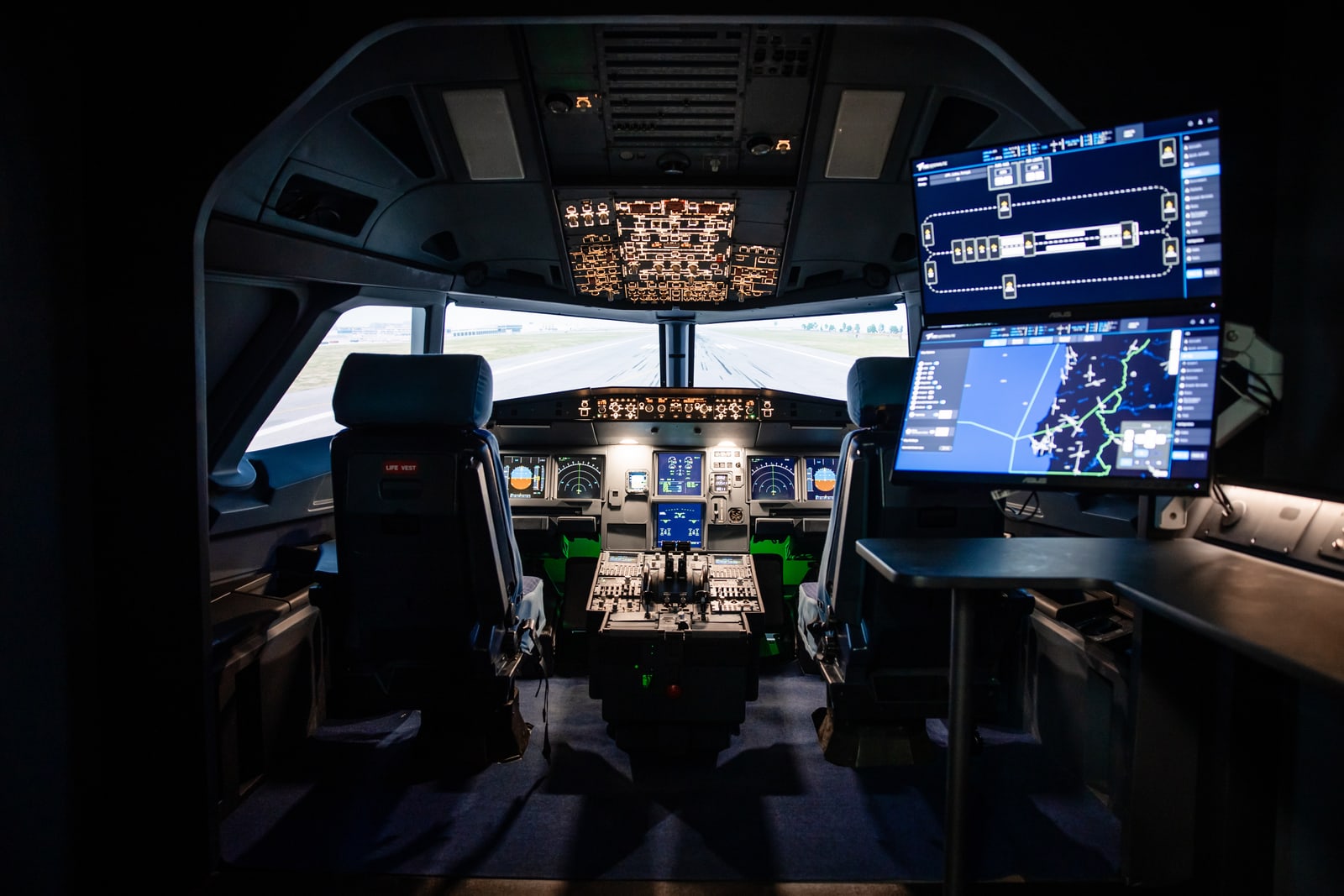
What an airline-grade FFS stack includes
Representative flight deck: structure, panels, and crew environment matched to your training objectives
Instructor station: IOS maps, trajectory, airport and environment control, debriefing hooks
Avionics and databus fidelity aligned to OEM or fleet ICD references
Qualification tooling: EQTG/QTG screens, device management, and traceable test history